Beyond the Monolith: Bytedance's 'Parker' Could Revolutionize the Linux Kernel
For as long as I can remember, the Linux kernel has been the ultimate monolith. It’s the single, all-powerful core that manages everything on a system. You pick one kernel, you boot it, and you stick with it. But what if that fundamental assumption is wrong? A new, mind-bending proposal from Bytedance, the tech giant behind TikTok, suggests a future where you don’t have to choose just one.
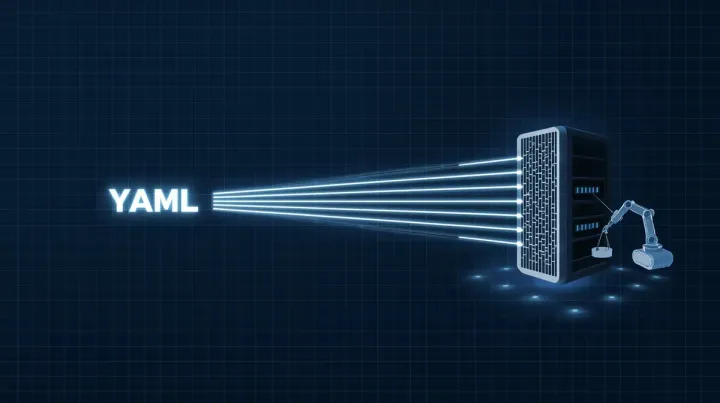
The proposal, codenamed “Parker,” aims to allow multiple, completely different Linux kernels to run simultaneously on the same machine. This isn’t virtualization as we know it. We’re not talking about running a full virtual machine with its own emulated hardware. We’re talking about different kernels sharing the same physical resources, managed by a thin layer that sits just above the hardware.
So, How Would This Even Work?
The Parker proposal, detailed on the Linux Kernel Mailing List (LKML), introduces a “dispatching layer.” When the system boots, this layer would be the first thing to load. Its job is to manage the CPU cores and memory, deciding which kernel gets what.
Imagine you have 16 CPU cores. You could assign 12 cores to a modern, general-purpose kernel (like 6.17) to handle your desktop and everyday applications. At the same time, you could dedicate the remaining 4 cores to a specialized, real-time kernel (like a PREEMPT_RT patched version) to run a single, latency-sensitive application. Both kernels would be running on bare metal, in parallel.
But Why? The Use Cases Are Fascinating
My first reaction was, “This sounds like a solution in search of a problem.” But the more I think about it, the more I see the genius.
-
Hyper-Specific Performance Tuning: The most obvious win is performance. Need to run a high-frequency trading bot or a professional audio workstation? Give it a dedicated real-time kernel. The rest of your system can run a standard kernel optimized for throughput, without compromise.
-
Bulletproof Legacy Support: We’ve all dealt with that one critical piece of hardware or software that only works with an old, specific kernel version. With Parker, you could run a hardened, ancient kernel just for that one application, while the rest of your system enjoys the security and features of the latest release.
-
The Ultimate Sandbox: This is the most exciting part for me. Imagine you download a sketchy application. You could spin up a temporary, minimal kernel instance for it that has almost no drivers or system call capabilities. The application would be completely isolated in its own kernel-level sandbox, drastically reducing the potential for harm. It makes current container technology look like a leaky faucet.
-
Painless Kernel Development: For developers like me, this is a dream. No more rebooting constantly or spinning up slow VMs to test a new kernel patch. Just assign a couple of cores to your development kernel, test your changes, and tear it down, all while your main system runs uninterrupted.
The Inevitable Skepticism
Of course, this is not a free lunch. The proposal is already facing a healthy dose of skepticism from the kernel community. The primary concerns are:
- Complexity: Is the added complexity worth the benefits? The Linux kernel is already one of the most complex software projects on Earth.
- Overhead: How “thin” is the dispatching layer, really? Any layer between the kernel and the hardware will introduce some performance overhead.
- Security: While it offers new security models, the dispatcher itself could become a massive, single point of failure.
My Take: A Necessary Evolution
Despite the challenges, I believe this is a necessary and brilliant evolution for Linux. The monolithic, one-size-fits-all approach has served us well for decades, but the demands of cloud computing, IoT, and specialized hardware are pushing it to its limits.
Bytedance’s Parker proposal is a recognition that the future of computing is heterogeneous. It’s a future where different tasks have different needs, and our operating systems should be flexible enough to accommodate that. It’s a radical idea, and it might take years to become a reality, if ever. But it has started a conversation that we desperately need to have. The monolith might not be dead, but its absolute reign is finally being questioned.